Let’s be clear. The ‘second city’ is an informal title and the choice is clearly a subjective one. So, obviously, the victor has to be Manchester.
Over the years, people have struggled to make up their minds as to which area is the UK’s biggest (culturally speaking) besides London. In the early 19th century, it was Dublin, then later Glasgow and Liverpool battled it out for the honour, both being major industrial cities at the time.
In 2015, research conducted by YouGov proved more people think of Manchester as the second city more than any other after we beat Birmingham to the top spot with 30% of the vote. But how does the land lie now?
B’ham has a strong claim – given the city-region is the second-largest in England, particularly in terms of its urban economy. Manchester is only the fifth largest by population.
ADVERTISEMENT
Progress in Manchester, however, has put the city in the spotlight in recent years and now it seems primed to take the crown, after being ranked as the second city in numerous polls since the 2000’s.
St. Peter’s Square in full spring bloom / Image: Adam Pester
When you ask people why, it really seems to come down to culture.
ADVERTISEMENT
Perhaps this is unsurprising, given the famous cultural exports of Manchester ranging from the suffragette movement to the Hacienda and the world’s first professional football league.
The city is also home to the longest-running soap opera in the world and has spawned a staggering 25 Nobel prize winners to date, as well as famous authors like Elizabeth Gaskell and Anthony Burgess.
According to the Trinity Mirror Data Unit, Manchester ranks ninth out of 50 cities for culture, with more music venues per 100,000 people than anywhere else in the country. It is also second for most libraries and cinemas.
ADVERTISEMENT
Birmingham, on the other hand, ranks 47th. Still, it beats us on Michelin stars with four more than Manchester (if you count Where The Light Gets In’s green award).
A birds eye view over the city of Manchester / Image: Adam Pester
The Midlands has also made some cultural strides in recent years with big club nights like Bigger than Barry and Moho, alongside arthouse venues like Yard and Ikon gallery.
It’s also started to get more food and drink independents popping up, as the dining culture moves away from big chains to a more local focus. Credit where credit is due.
Culture aside, there are other important factors to take into account such as universities, which are the lifeblood of many UK cities.
The University of Manchester currently ranks sixth in the country, whilst Birmingham sits at 87th. No competition to speak of there, then.
ADVERTISEMENT
And what about sport? Well, in 2020 Manchester ranked the 8th best sports city in the world by BCW Sport. It also successfully hosted the Commonwealth Games in 2002, whilst Birmingham failed in its bid to host the 1992 Olympics.
However, Birmingham does host the international athletics meetings and will be the centre of the Commonwealth Games in 2022.
It also goes without saying that Manchester has two of the best football teams in the country, no matter if you’re red or blue. Yes, for a time Aston Villa were the best in England – winning their first division title five times before United or City – but since then Manchester has far out-stripped the Midlands teams in terms of titles.
Overall, it seems clear Manchester is the victor.
Even Birmingham’s own residents seem to agree, according to a study conducted in 2017 which discovered a massive 38 percent view the birthplace of Oasis, Corrie and The Stone Roses as the true second city. This figure increased to 44 percent when only 18 to 24-year-olds were asked.
ADVERTISEMENT
Even though Birmingham might be the most populous city outside of London and a bigger contributor to national GDP, most people believe Manchester is worthy of the second city title. After all, size isn’t the only thing that’s important.
Feature image / Adam Pester.
Art & Culture
ENB’s Romeo & Juliet at Palace Theatre Manchester – the world’s most famous story expertly reimagined | Review
Emily Sergeant
Every now and then you experience a bit of a full circle moment… and for me, this was one of them.
Back in 2011, when I was a dance-obsessed 14-year-old, taking and assisting classes countless times a week, I became enamoured by a BBC documentary series called Agony & Ecstasy: A Year with English National Ballet. As one of the country’s premier ballet companies – celebrating its 60th anniversary at the time of the documentary – ENB allowed cameras behind the scenes, from the rehearsal room to backstage, giving audiences a previously unseen inside look on what it takes to stage some of the most spectacular productions your eyes will ever meet.
One of the ballets being staged in the year the BBC followed the company was Romeo & Juliet.
Based on a story known around the world and with an unmistakable score by Prokofiev, it’s a ballet I was already fond of prior to the documentary, but seeing the work that went into making the show a reality, up close like never before, it turned into one of my favourites.
Over the years, I have been fortunate enough to see several different dance stagings of Romeo & Juliet – but last night, at the Palace Theatre in Manchester, was the first time I got to sit in the audience and see English National Ballet’s production live with my own eyes.
And it was just as magical as I was hoping it would be.
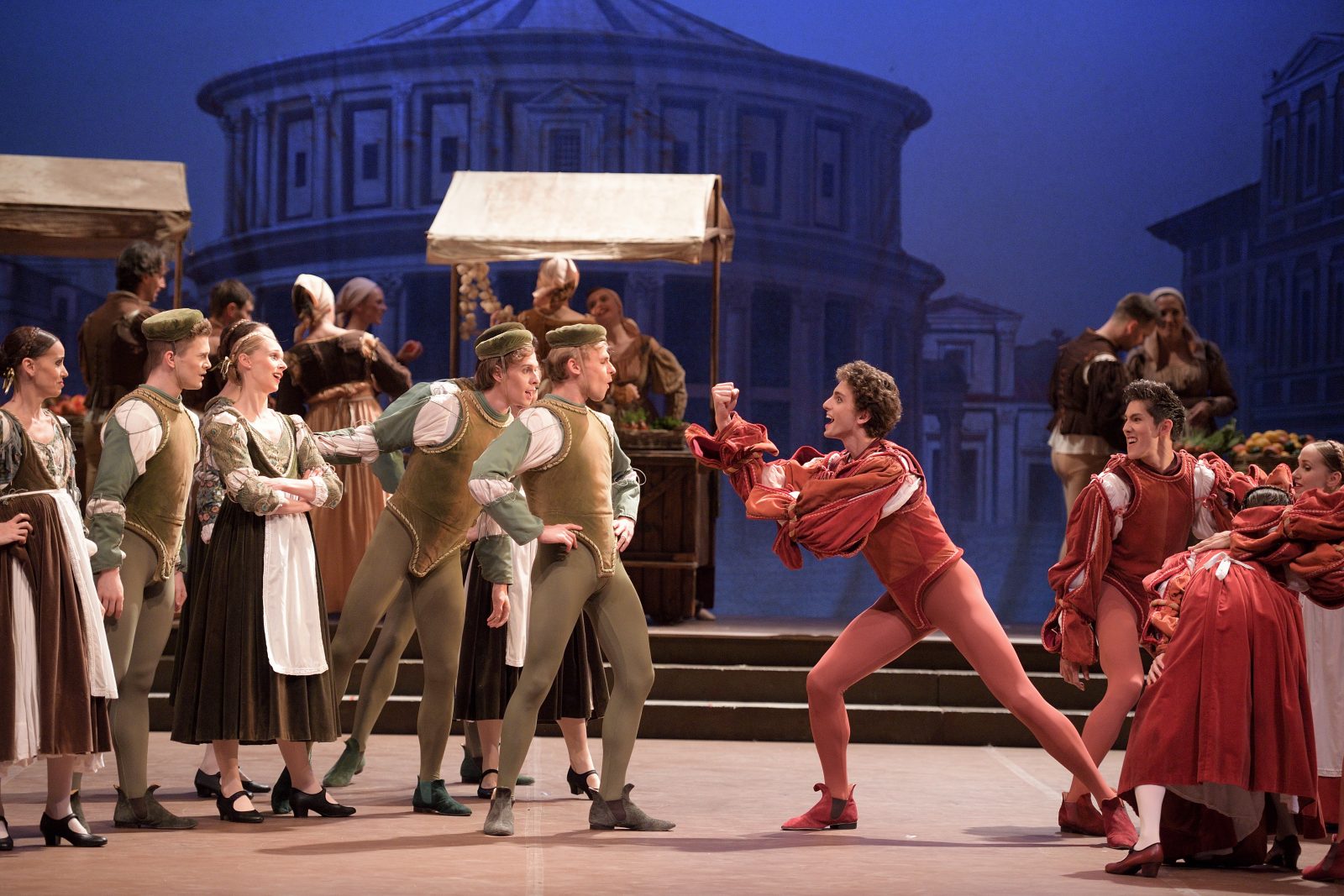
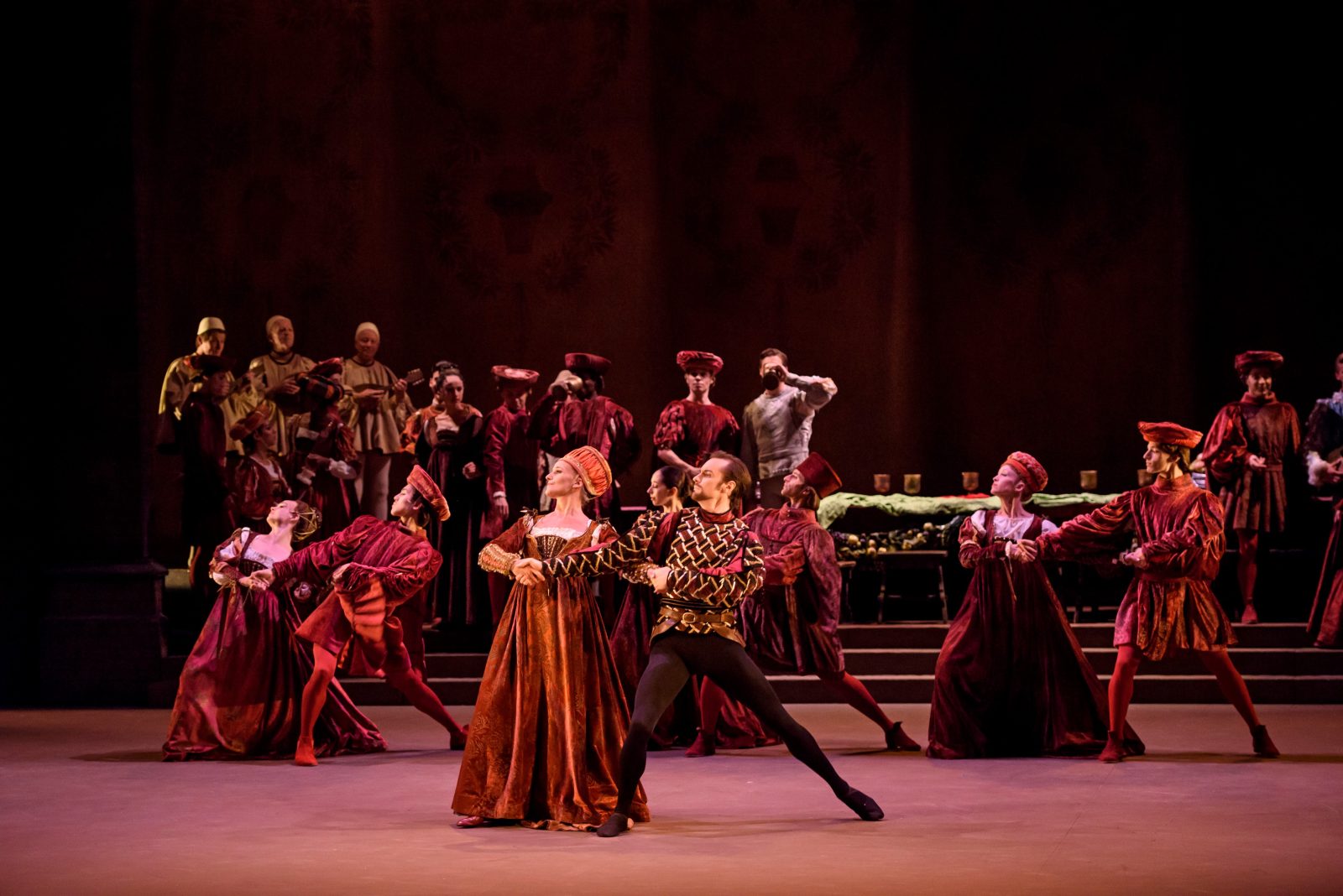
ENB’s Romeo & Juliet is now on stage at Manchester Palace Theatre / Credit: Laurent Liotardo
Right off the bat, I’m just going to presume you already have somewhat of a grasp on the story of Romeo & Juliet, right? Given the fact it’s arguably Shakespeare’s most famous work and one of the most iconic plays of all time.
And you’ll be pleased to know, even if you’re not seasoned in watching ballet, that the story we all know and love remains largely intact for this production, therefore making it easy for audiences of all ages and interests to follow along and admire.
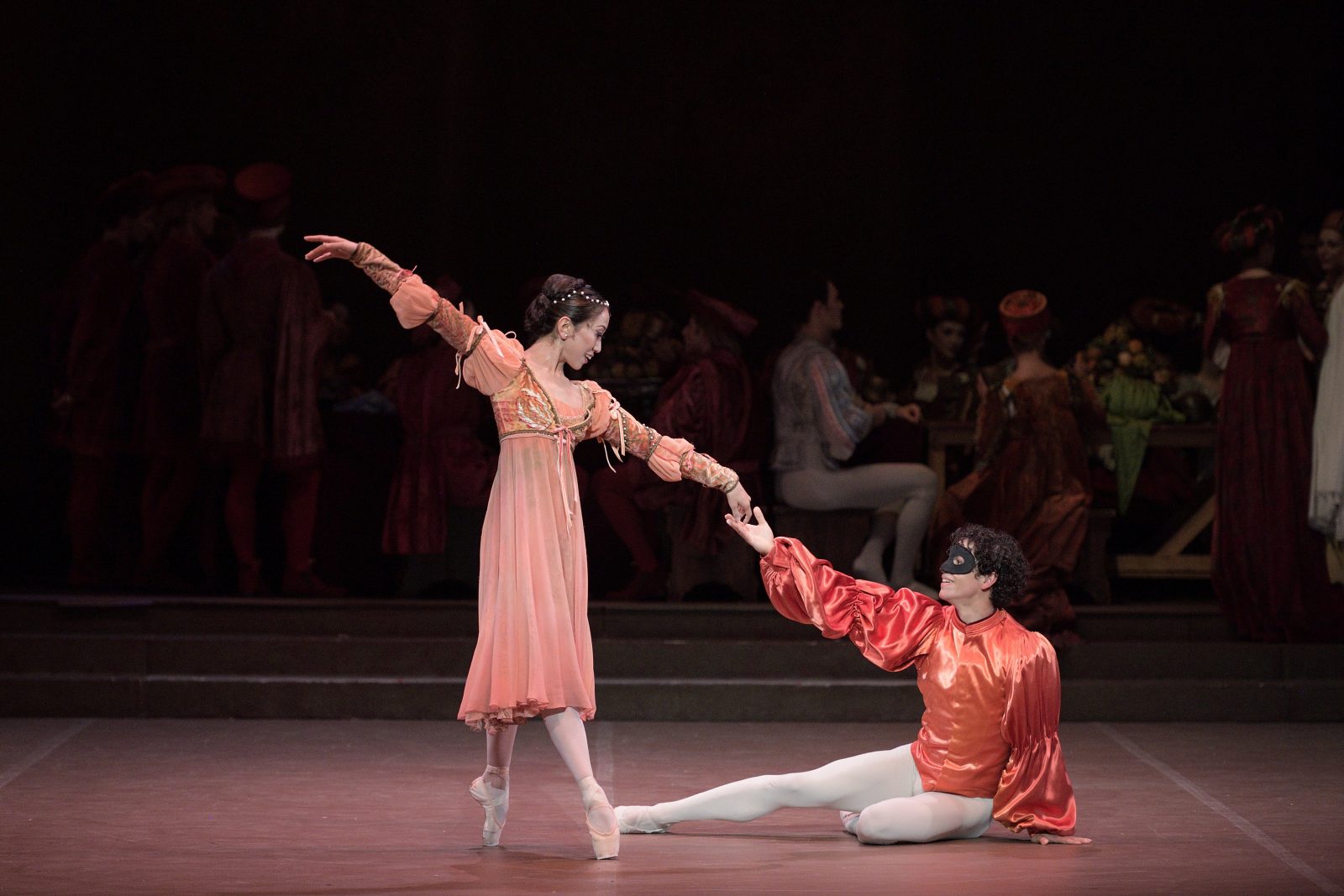
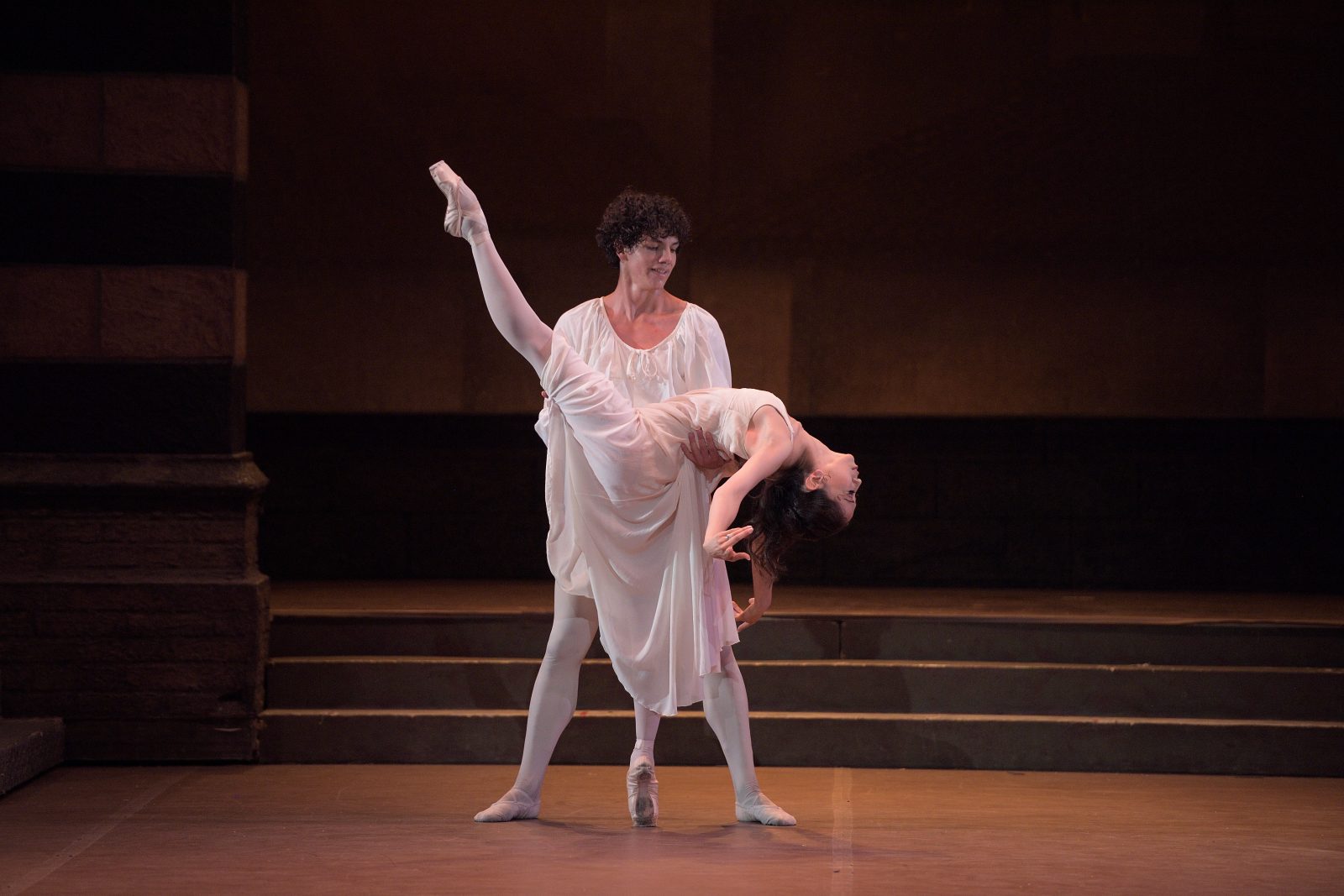
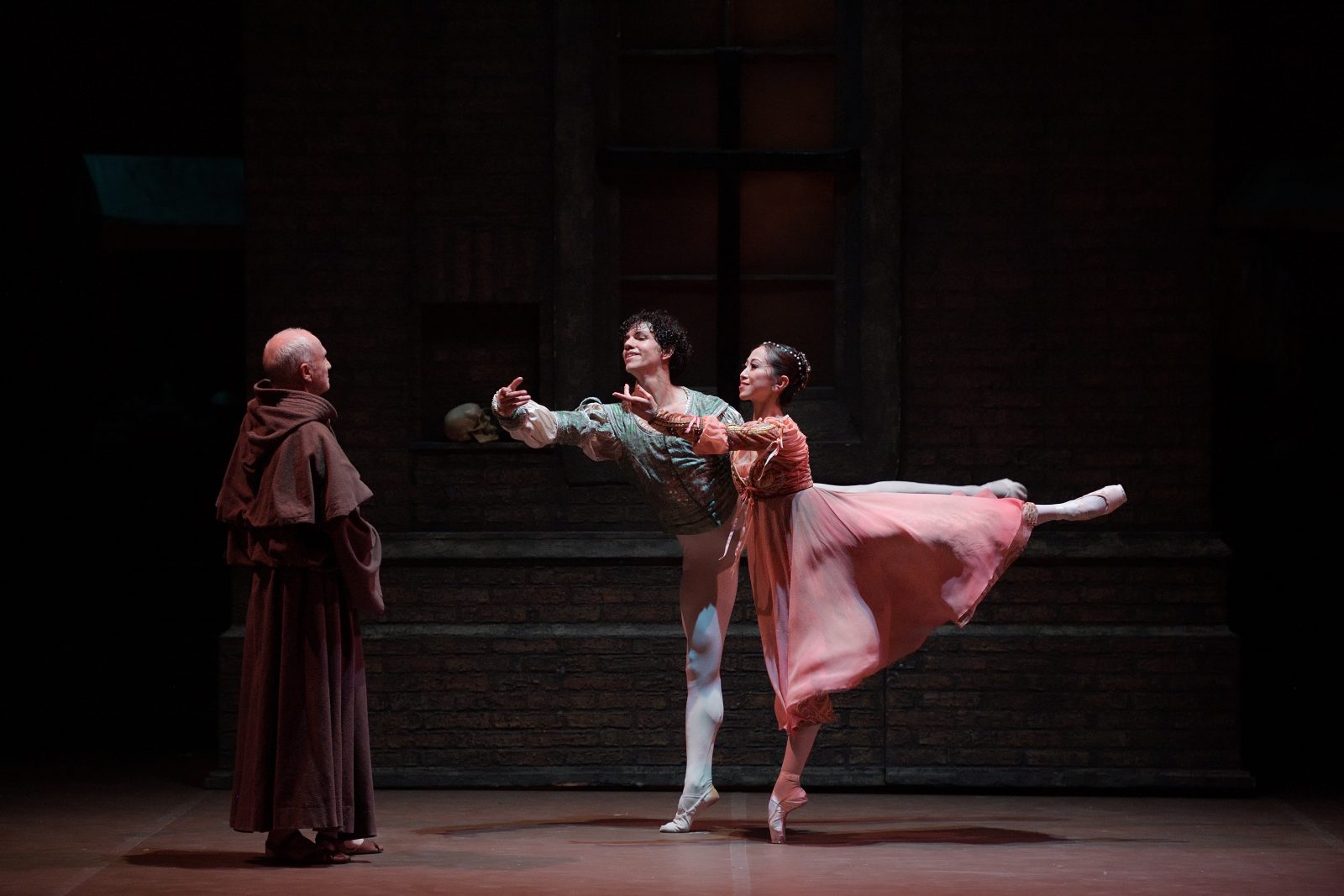
The two title characters, the star-crossed lovers themselves, were embodied expertly by Rentaro Nakaaki and Julia Conway as Romeo and Juliet, who had the audience captivated from the second they entered the stage – with undeniable chemistry and enviable technique.
Fabian Reimair took on the role of Tybalt with ease, Noam Durand was Mercutio, and Rodrigo Pinto was Benvolio, all while Elvis Nudo and Minju Kang stepped into the shoes of Paris and Rosaline.
But the lead roles are nothing without the wider cast of supporting dancers and character actors, who really help transport you to 14th century Verona and help bring the authenticity a production as epic as this requires.
The world’s most famous story has been expertly reimagined / Credit: Bill Cooper | Laurent Liotardo
Aside from the dancing, it would be remiss not to praise the expert sets and costuming here from Ezio Frigero and Franca Squarciapino.
And I suppose I should also give a shoutout to little-known name, Rudolf Nureyev, who choreographed this version of Romeo & Juliet all the way back in 1977. Something tells me he would’ve had a great career… I could be wrong, though.
Romeo & Juliet really is one of the most tragic love stories of all time, and the power of that is not lost through dance. It’s still as raw and heartbreaking in this production as it always is.
And that is truly a credit to every single person forming part of it – both on the stage and off.
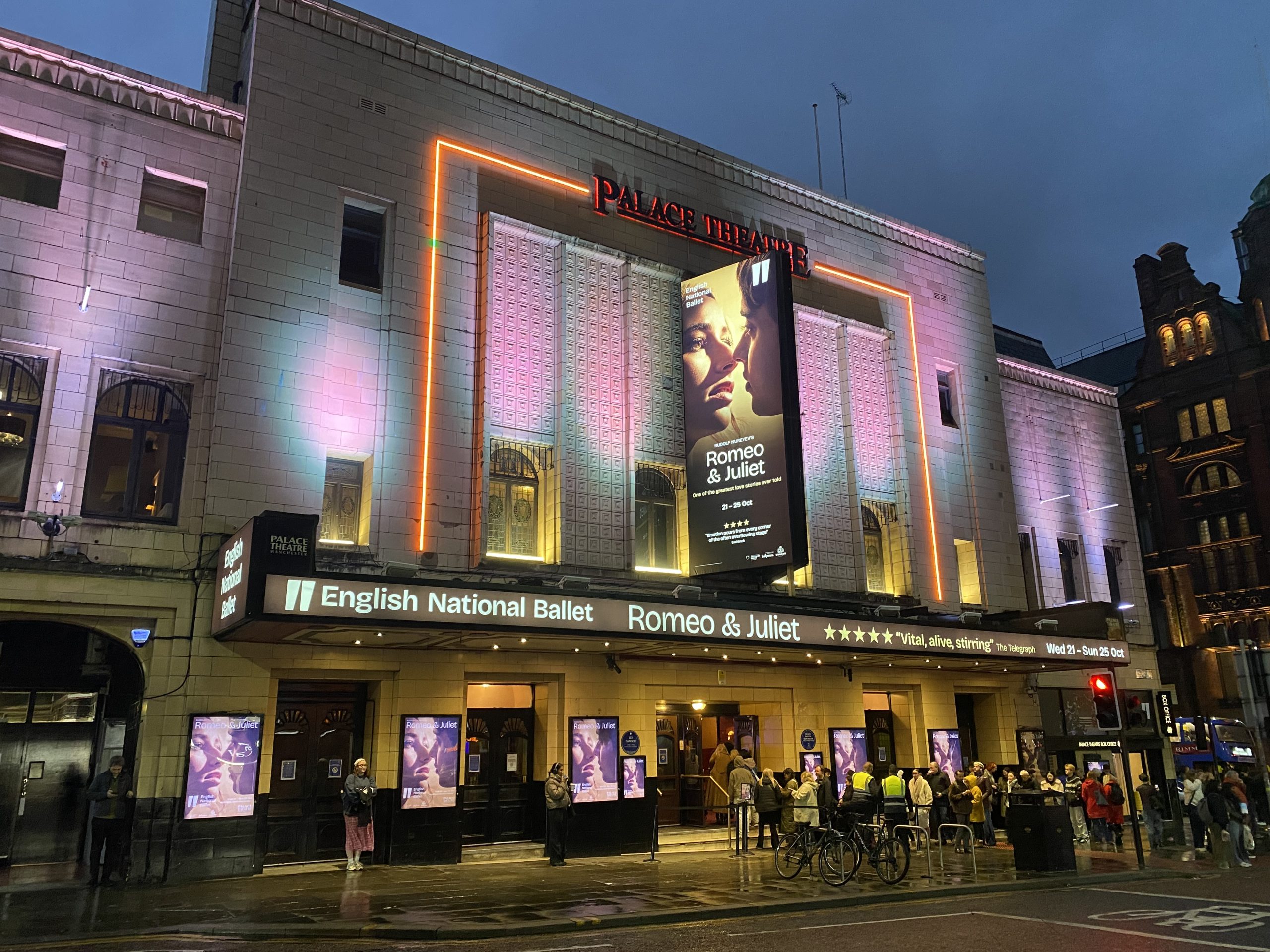
ENB’s Romeo & Juliet is now on stage at Manchester Palace Theatre until Sunday 25 October, and you can book your last-minute tickets here.
Featured Image – The Manc Group
Art & Culture
Tickets officially go on sale for rare 70mm IMAX screenings of Dune: Part Three in Manchester
Emily Sergeant
Tickets have now officially gone on sale for rare 70mm IMAX screenings of Dune: Part Three in Manchester.
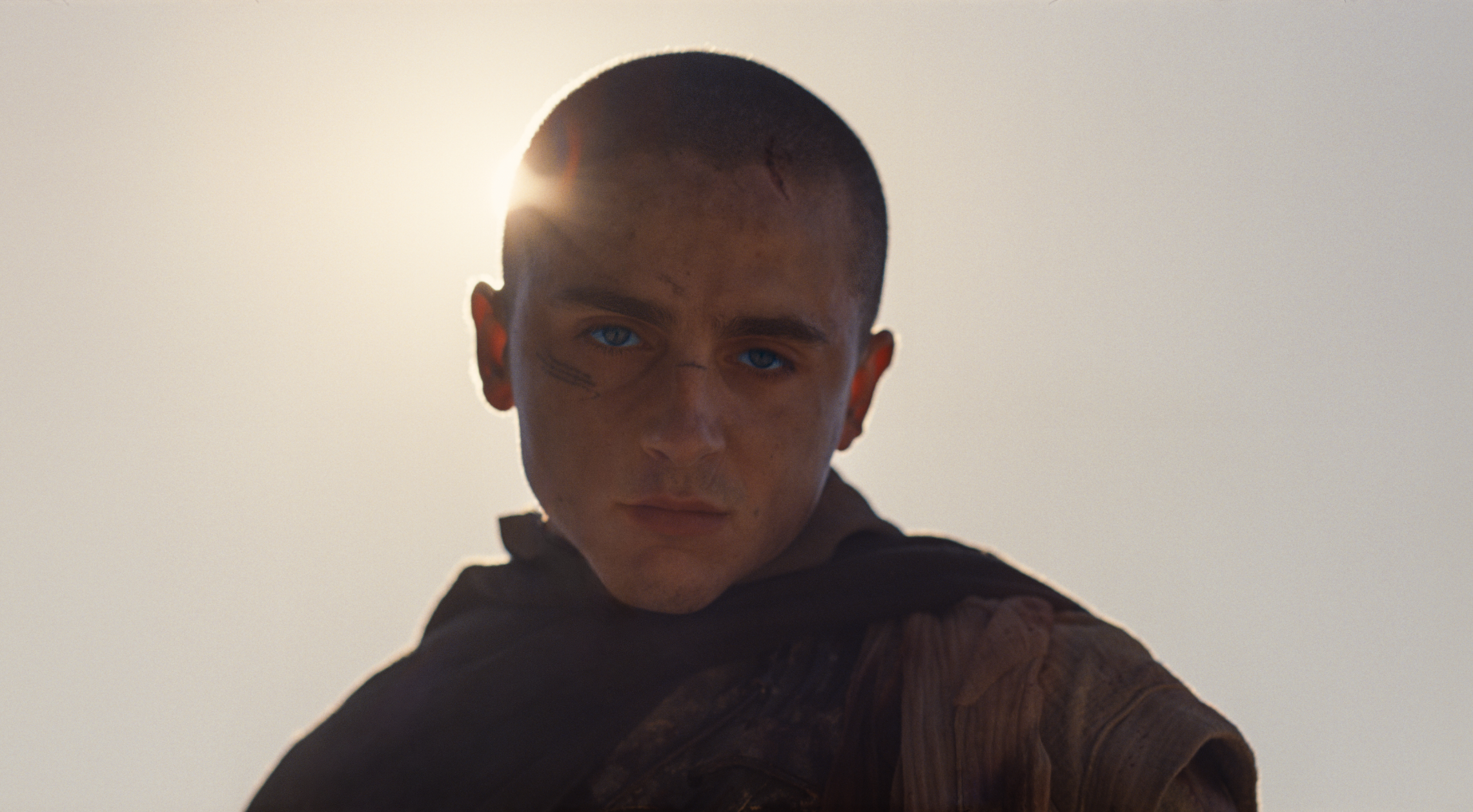
Arriving on screens from 18 December and gearing up to be one of the most anticipated films of the year, Dune: Part Three – which is the third and final instalment in director Denis Villeneuve’s Dune franchise – will be screening in IMAX 70mm at Vue Manchester Printworks, one of only three venues to show it in this format nationwide.
There are only 40 other venues across the globe showing the film in IMAX 70mm, and Manchester is the only city outside of London to screen the blockbuster this way too.
Based on the novels of Frank Herbert and set nearly two decades after the previous film, Dune: Part Three features an ensemble cast of all-star names led by Timothée Chalamet and Zendaya.
Alongside them will be Jason Momoa, Florence Pugh, Anya Taylor-Joy, Rebecca Ferguson, Robert Pattinson, Charlotte Rampling, Javier Bardem, and Josh Brolin.
After seats for a special early screening of the film in IMAX sold out in less than 30 minutes last month, the IMAX 70mm showings – which officially went live today (20 October) – are expected to be snapped up fast by film fans in Manchester.
“A decade in the making, Denis Villeneuve’s epic Dune trilogy is reaching its dramatic conclusion this December,” explained Dean Cross, who is the Senior Screen Content Manager at Vue.
“As the only venue outside of London to be screening Dune: Part Three in IMAX 70mm, it’s a privilege for us to offer this unique way to experience the film.”

 Georgina Pellant -
10th June 2021
Georgina Pellant -
10th June 2021